Why Brazilian jewelry? The craft tradition behind semi-joias
Brazil doesn't come to mind immediately when Europeans think of jewelry — yet it has one of
the world's most developed industries for quality non-fine jewelry. The semi-joia sector
is built around two cities: Limeira (São Paulo state), the historical
capital of Brazilian jewelry production since the 1950s, and Fortaleza
(Ceará), which built its reputation on more expressive, color-forward designs rooted in
the culture of Brazil's northeast.
The technical foundation of Brazilian semi-joias is electroplating: layering copper, brass,
then 18k gold or rhodium through controlled galvanic baths. What distinguishes established
Brazilian workshops isn't the technique itself — it's the decades of refinement, the
combination of precision machinery and hand-finishing, and the plating thickness controls
applied at each production stage. These standards produce a finish that holds through regular
wear, unlike cheaper fashion alternatives that degrade within months.
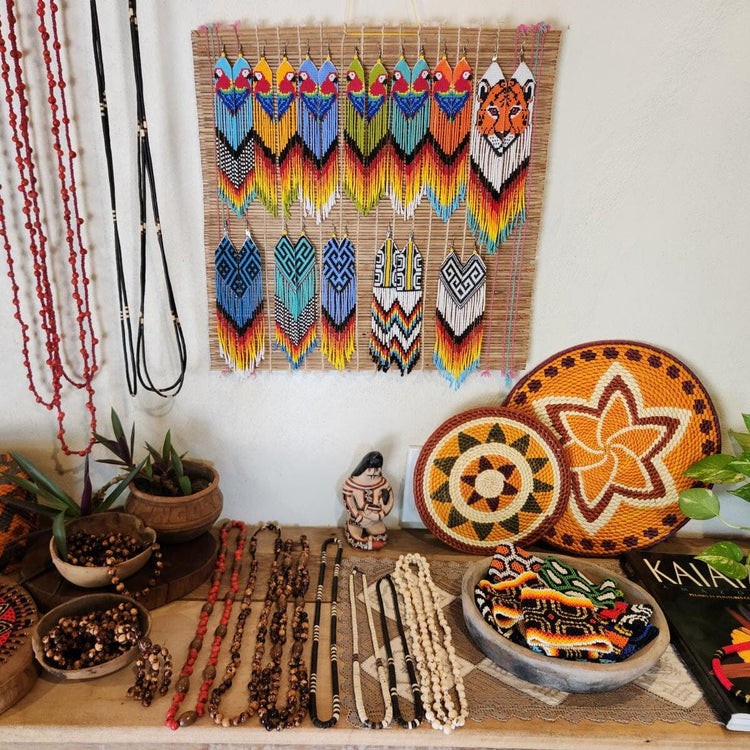
The aesthetic vocabulary is equally distinctive. Pre-Columbian geometric patterns, West African
influence in bold volumes and neckpieces — brought by Brazilians whose ancestors shaped the
country's cultural identity — and Portuguese colonial fine jewelry traditions have merged into
something recognizably Brazilian. It doesn't look like Italian gold or French fine jewelry.
It draws from a completely different cultural history, and that's the point.
Discover our prestige selection
or explore the full range:
necklaces,
earrings
and bracelets.
Learn more about the materials and production process in our
materials and craftsmanship section,
explore current jewelry trends
and browse all our guides.