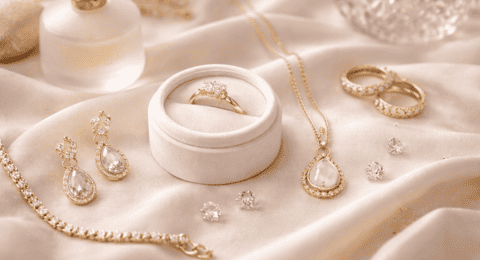
Gold plating is a popular term in jewelry, but what exactly does it mean? This guide unpacks the essence of gold plating, its unique qualities, and why it captivates jewelry lovers worldwide.
Understanding Gold Plating
Gold plating involves applying a thin layer of gold onto the surface of another metal. It offers the luxurious look of solid gold at a more accessible price. This delicate finish transforms simple metal pieces into radiant treasures.
Unlike solid gold, gold-plated items have only a very thin gold layer, making them more affordable while retaining the beauty of gold. Even delicate designs, like our gold-plated stud earrings with white zircon, benefit from this technique.
The Art and Science of Plating
The plating process blends precision and expertise. It starts with preparing the base metal—often brass or copper—cleaned thoroughly to remove impurities. The piece is then dipped into a gold-ion solution where an electric current bonds the gold layer to the metal beneath.
The thickness of this gold layer is key to durability, typically ranging from 3 to 5 microns. This ensures a brilliant shine and lasting wear, as seen in our 1cm gold-filled rectangle hoop earrings.
Benefits of Gold Plating
Choosing gold plating offers many advantages. It makes the allure of gold more accessible, striking a balance between elegance and practicality—ideal for semi-fine jewelry that combines beauty and quality at a fair price.
Beyond affordability, well-crafted gold-plated jewelry withstands daily wear and retains its shine for years, making it a smart choice for those seeking stylish pieces without rapid wear.
Gold Plating vs. Other Finishes
It's important to distinguish gold plating from other finishes like vermeil or gold-filled. Vermeil features gold over sterling silver, offering a distinct appeal, especially when comparing gold plating, silver, and steel.
Gold-filled pieces have a thicker gold layer than plating, providing even greater durability. Your choice depends on personal taste, budget, and the base metal's role.
Gold Plating in Today’s Trends
Gold-plated jewelry fits seamlessly into modern fashion, from timeless classics to bold contemporary designs. Whether dressing up daily wear or elevating evening looks, gold plating continues to grow in popularity.
The rising interest in gold, combined with consumer awareness of cost and longevity, makes gold plating especially appealing. Designers keep innovating, offering fresh, refined pieces that captivate.
Caring for Gold-Plated Jewelry
To keep your gold-plated jewelry radiant, remove it before applying perfumes or creams, as chemicals can dull the finish. Avoid wearing it during intense activities that may scratch the surface.
Clean gently with a soft cloth—harsh cleaning can damage the plating. Store pieces separately to prevent scratches and preserve their beauty.
The Impact of Base Metals
The choice of base metal affects weight, durability, and appearance. Brass and copper are common for their malleability and strength, but each metal interacts differently with the gold layer, influencing longevity.
For more robust wear, especially for everyday essentials like our key pieces and gifts, selecting a denser base metal can enhance structural integrity.
Looking Ahead: The Future of Gold Plating
Gold plating remains a symbol of accessible, lasting beauty in jewelry. Future advances in plating techniques and material blends promise even more variety and personalization for jewelry enthusiasts.
Remember, the quality of gold-plated jewelry also depends on the plating thickness. For detailed insights, see our guide on gold plating thickness. Whether for yourself or as a gift, gold plating is a stylish, thoughtful choice for any occasion.