Jewelry oxidation is often mentioned, yet few truly understand why some pieces tarnish within weeks while others retain their shine for years. Factors like humidity, metal reactions, and plating quality are key — and Brazilian jewelry behaves very differently from European styles. Before learning how to protect your pieces, it’s important to grasp what triggers oxidation and how to naturally slow it down.
Why Protecting Your Jewelry from Humidity Matters
A jewelry's elegance isn’t just about its sparkle; it’s about enduring beauty over time. Yet, a subtle and often overlooked enemy—humidity—can quickly dull that shine. Invisible and everywhere, moisture accelerates metal oxidation and can weaken finishes. Understanding its effects and how to guard against it is essential for preserving your gold-plated, silver, stainless steel, or Brazilian semijoias.
How Humidity Affects Your Jewelry
Humid air carries more water molecules and sometimes sulfur, which chemically react with metals:
- Silver: moisture promotes silver sulfide formation, causing darkening.
- Gold-plated pieces: water can seep under plating, shortening its lifespan and dulling the shine.
- Stainless steel: though more resistant, excessive humidity may cause tiny spots or dull polished surfaces.
- Semijoias: moisture can damage the protective German lacquer, especially combined with sweat or cosmetics.
For example, a gold-tone semijoia bracelet with rhinestones exposed to frequent humidity may lose its brilliance faster, with stones becoming dull and internal corrosion forming between settings.
Essential Preventive Steps
Protecting your jewelry starts with limiting exposure to moisture. Effective habits include:
- Avoid bathrooms: hot steam is jewelry’s worst enemy.
- Always dry your pieces: especially after warm, humid days or sports.
- Store in microfiber pouches: they absorb residual moisture.
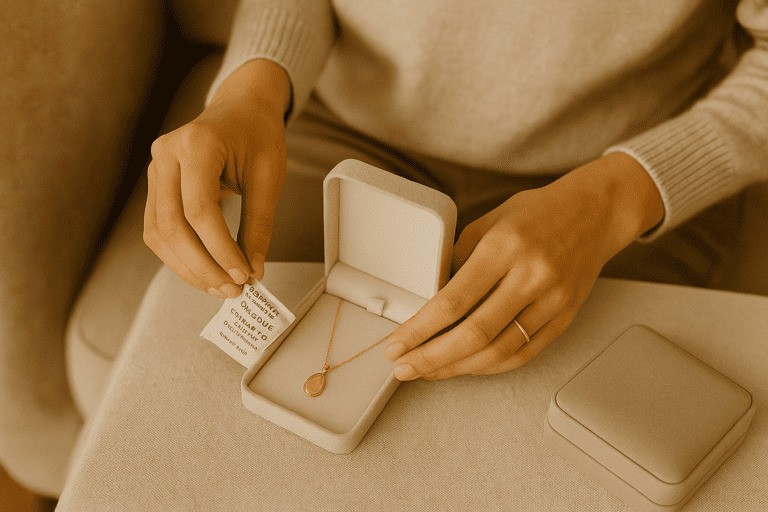
- Add silica gel packets: keep humidity in check inside jewelry boxes.
- Keep away from damp skin: sweat, creams, and perfumes trigger chemical reactions.
These simple actions prevent water from settling in tiny metal cracks, reducing oxidation, tarnish, and corrosion.
Make Cleaning a Ritual
Regular gentle cleaning removes moisture, salt, and skin acids, greatly extending your jewelry’s life—especially when combined with our care tips. A weekly routine can make all the difference.
Smart Storage Choices
Proper storage is key against humidity. Choose closed boxes lined with soft fabric, never store jewelry in damp places. Gift accessories like pouches and cases offer excellent protection. For more tips, see our guide on storing jewelry correctly.
Why Does Humidity Oxidize Jewelry? (Technical Insight)
Humidity acts as a catalyst, speeding up chemical reactions between metals and molecules in air or on skin. For instance:
- Silver reacts with sulfur to form black silver sulfide.
- Gold plating dulls when water seeps beneath the surface.
- Stainless steel can tarnish due to micro-oxidation from sweat minerals.
These are natural processes, not defects. The more humid the environment, the faster they occur.
Ultimately, protecting your jewelry from moisture preserves not just its look but the memories and emotions each piece holds. Care for them as they complement your style, and they’ll shine for years, whatever the season.
For more maintenance advice, visit our jewelry care page.
How Long Does It Take for Jewelry to Oxidize?
Oxidation doesn’t happen overnight. It depends on environment, humidity, metal composition, plating quality, and care habits. Comparing European and Brazilian jewelry—known for superior durability—helps understand real lifespan.
Oxidation: Natural but Preventable
Oxidation isn’t a sign of poor quality; it’s a normal reaction when metals meet air, moisture, and acidic or sulfur compounds on skin and surroundings.
Typically:
- Poorly cared for jewelry: visible oxidation within 1 to 4 weeks depending on metal and humidity.
- Well-maintained pieces: minimal oxidation after 6 to 18 months.
- High-quality Brazilian semijoias: almost no visible oxidation before 18 to 36 months, sometimes longer.
Why Do Brazilian Jewelry Resist Oxidation Better?
Brazilian semijoias benefit from craftsmanship distinct from European jewelry:
1. Higher Gold and Silver Content
They typically feature:
- thicker gold plating (8 to 12 layers of 18K or 22K gold),
- high-quality brass or surgical steel base,
- longer, denser electroplating processes.
In contrast, most European gold-plated jewelry uses thinner plating less resistant to humidity and wear.
2. Premium German Lacquer
This high-temperature transparent coating shields metal from:
- humidity,
- acidic sweat,
- cosmetics,
- sulfur-rich air.
This protective finish is a hallmark of Brazilian jewelry, rarely found in Europe at similar price points.
3. Skilled Artisan Craftsmanship
In cities like Fortaleza, São Paulo, and Rio, artisans blend tradition with modern techniques. Metals are polished multiple times and stones hand-set, creating smoother surfaces that resist oxidation better.
Without Proper Care: When Does Tarnish Appear?
Common observations include:
- Silver jewelry: darkening within days under high humidity, cosmetics, or saltwater.
- European gold plating: dullness after 2 to 4 weeks of heavy wear.
- Brazilian semijoias: slight tarnish after 3 to 6 months if never cleaned.
- Low-grade stainless steel: tiny spots within 1 to 2 months.
Humidity is the top factor. In warm, humid regions (Brazil, overseas territories, southern France), oxidation can speed up threefold without care.
With Proper Care: How Long Does Jewelry Stay Pristine?
Good habits can delay oxidation significantly:
- Well-maintained silver: shine preserved 12 to 24 months.
- Average-quality gold plating: brilliance lasts 6 to 12 months.
- Brazilian semijoias: shine maintained 24 to 48 months or more.
- Stainless steel: very long lifespan (5+ years) if dried properly.
Brazilian jewelry offers the best value, combining durability with accessibility.
Why Do Jewelry Pieces Sold in France Tarnish Faster?
Several reasons explain this:
- Thinner plating to reduce costs.
- Fewer protective layers (often 1 to 3 vs. 8 to 12 in Brazil).
- Absence of German lacquer, standard in Brazil.
- More sensitive alloys in inexpensive pieces.
In short, a €19 European piece and a €19 Brazilian piece differ technically: one prioritizes low price, the other durability.
How to Further Extend Your Jewelry’s Lifespan
1. Weekly Cleaning
Removing sweat and moisture residues slows chemical reactions.
2. Dry, Closed Storage
Use silica gel, microfiber pouches, or velvet-lined boxes.
3. Always Dry After Wearing
This simple step can double a semijoia’s life.
4. Rinse After Sports or Swimming
Mineral salts and chlorine accelerate oxidation.
Durability: A Brazilian Craftsmanship Commitment
Brazilian jewelry is designed to withstand humid tropical climates. That’s why artisans use superior materials and techniques. Where basic jewelry oxidizes quickly, a well-cared-for semijoia can keep its shine for years, even in moisture-rich environments.
Lupita Bijoux aims to showcase this quality: accessible jewelry built to last.
Protecting your jewelry from humidity means more than preserving shine—it’s about extending the life of cherished accessories. Whether you wear Brazilian bracelets, an elegant necklace, or a semijoia crafted in Fortaleza, quality is key to longevity. This is where Brazilian jewelry truly stands out.
Unlike many European pieces, often made with thin plating or fragile alloys, our Brazilian items feature thicker plating, higher gold or silver content, and a durable German lacquer. This lacquer, common in top Brazilian jewelers, forms a protective barrier that greatly slows oxidation, stabilizes color, and shields metal from moisture, sweat, and everyday micro-scratches.
Thanks to this blend of dense plating, quality materials, and German lacquer, our jewelry requires less intensive care and retains its brilliance much longer. This is why Brazilian semijoias are renowned worldwide: they last, resist, and shine. Choosing Lupita Bijoux means selecting pieces designed to endure seasons far better than most European alternatives.
Care for your jewelry, and it will reward you. Good habits preserve beauty—but quality makes all the difference.